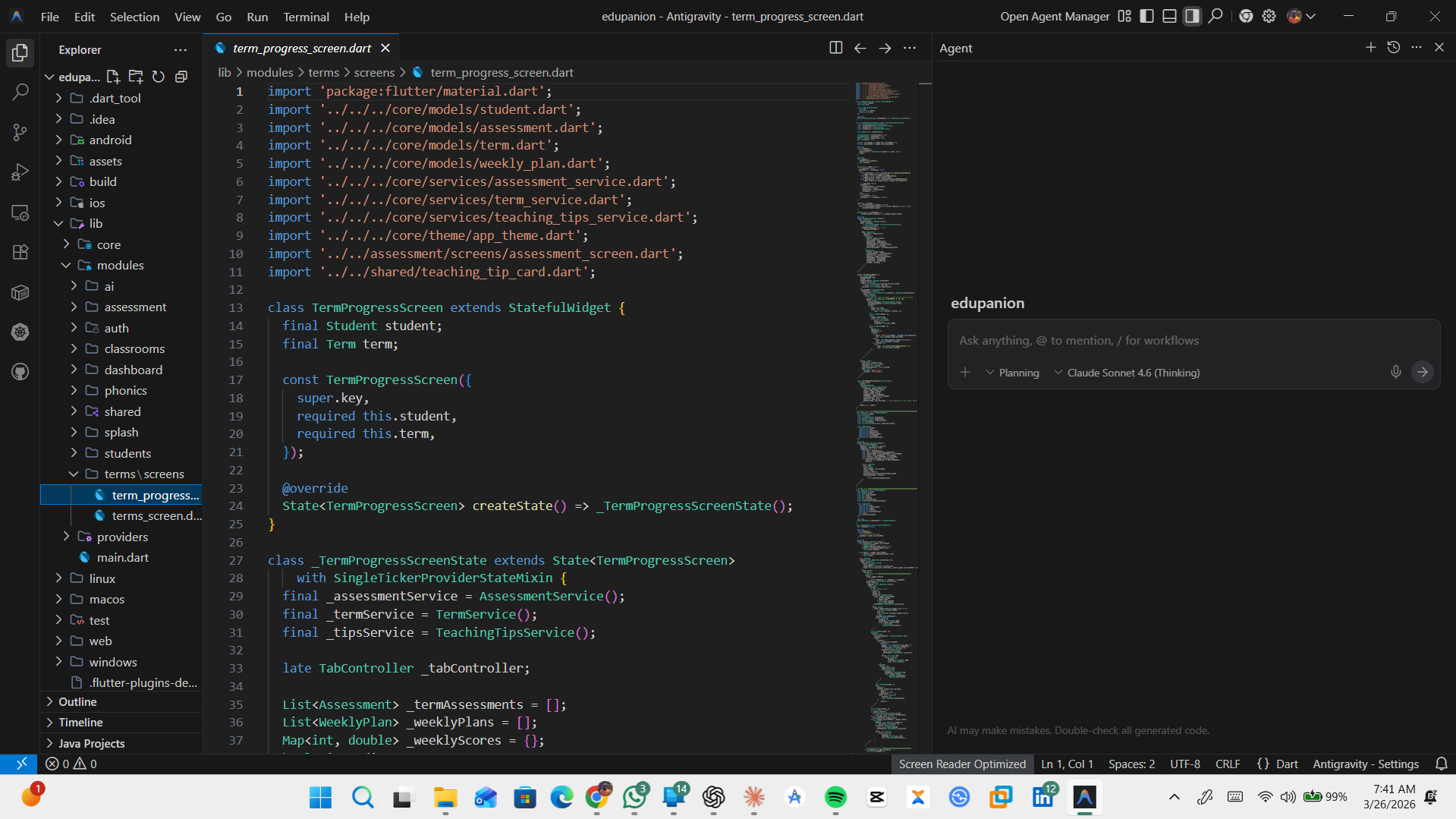
I built my first Flutter app the wrong way. Not the wrong app. The wrong way. I had AI generate the code. I copied it. I pasted it. It worked — until it didn't. And when it broke, I had no idea why. Because I never truly understood what the code was doing in the first place.
I want to be honest about that — because I think a lot of developers, especially self-taught ones, are doing the same thing right now. And I want to tell you what it cost me, and what I learned from it.
These are the three things I wish I had known before I wrote my first line of Flutter code.
1. State Management Will Break You If You Don't Understand It
This was my biggest pain point. By a significant distance.
Data wasn't updating the way I expected. The UI wasn't reflecting changes that should have been obvious. I'd fix one thing and something else would break. I'd spend hours — sometimes entire days — debugging something that came down to one concept I hadn't properly grasped.
The problem wasn't Flutter. The problem was that I didn't understand how data flows through an app. How state is managed. How widgets rebuild when something changes. How a change in one part of the app is supposed to trigger an update somewhere else.
When you don't understand that, every bug feels like a mystery with no solution. You're not debugging — you're guessing. And guessing in code is exhausting.
Supabase policies, row level security, table configurations — all of these added layers of complexity on top of a foundation I hadn't properly built. The errors weren't random. They were predictable. I just didn't have the knowledge to predict them.
If I could go back, I would spend real time — dedicated, focused time — understanding state management before writing a single line of production code. Not just copy a solution that works. Understand why it works. Understand what breaks it. Build that mental model first.
Everything else in Flutter becomes significantly easier once state management makes sense.
2. Learn the Language, Not Just the Framework
Flutter is built on Dart. And I wish I had taken Dart seriously before jumping into Flutter.
When AI generates code for you and you don't understand the language underneath it, you can use the code — but you cannot own it. You can't look at a function and understand what it's doing. You can't spot the flaws in the logic. You can't simplify it when it's overcomplicated. You can't adapt it when the requirements change.
You become dependent on the tool that generated it. And that dependency has a cost.
My goal going forward is not to memorise syntax. Syntax you can look up. My goal is to understand logic — to look at any piece of code and be able to ask: what is this doing? Why was it written this way? Where could this break? Is there a simpler, cleaner way to achieve the same result? That kind of thinking doesn't come from copying code. It comes from learning the language it's written in.
I am revisiting my existing codebases now with this mindset. Going function by function. Understanding what each part does, what it depends on, where it could fail. It is slower than just building. But it is making me a different kind of developer — one who can actually own what they build.
If you are starting with Flutter today: learn Dart first. Not perfectly. Not for months before you write a single widget. But enough to understand what you're reading. Enough to ask good questions. Enough to not be a stranger in your own codebase.
3. Document Every Bug — and How You Fixed It
This one I learned too late. And it is the simplest of the three.
Every time I ran into an error — a state issue, a Supabase sync problem, a widget rendering incorrectly — I would fix it and move on. I didn't write down what caused it. I didn't record what I tried. I didn't note what finally worked.
Months later, I would hit the exact same bug. And start from scratch again. Same confusion. Same hours of debugging. Same eventual fix that I had already found once before and forgotten entirely.
A simple bug journal — even just a running notes document — would have saved me weeks of repeated work. It would have helped me see patterns in my own mistakes. It would have built a personal reference I could return to every time something broke. Over time, it would have become one of the most valuable things I owned as a developer.
You don't need a complicated system. A Google Doc. A Notion page. A notes app on your phone. Whatever you will actually use. Just write it down — the error, what caused it, what fixed it. That's it. That habit alone will compound into something significant over a year of building.
Where I Am Now
Today I have shipped production apps with real users, AI integrations, and complex Supabase backends. I have built mobile apps, web apps, and a trust infrastructure platform that serves vendors across Nigeria. These lessons — learned the hard way — are part of the reason those products exist and work.
I am not telling you this to impress you. I am telling you because I want you to understand that the mistakes I described above did not stop me from building. They slowed me down. They cost me time. But they also taught me things I could not have learned any other way.
The best developers I know are not the ones who never made mistakes. They are the ones who made mistakes, understood them, documented them, and never made the same one twice. That is the standard I am holding myself to now. And it is the standard I would encourage any self-taught developer to pursue.
Still learning. Still building. Always improving.
Building with Flutter and hitting walls?
I write honestly about what it's like to build real products as a self-taught developer from Nigeria. Follow along — the lessons keep coming.
Follow on LinkedIn →